Reid: And that’s a good point. It’s not as simple as dropping it in tanks and filling cars. There are hurdles, though not like powering everything with hydrogen. But there are challenges.
It does have legs for the engines and technology we have now. Let’s talk about the existing fleet, the vehicles on the road, how they can use this fuel currently, and how you’d support older and newer vehicles as a product like this is introduced.
Eichberger: That’s the rub. The biggest challenge is assuring the right fuel is used by the right vehicles. Vehicles today are approved for E15. Let’s assume every vehicle can run E15. Only about 7 percent of vehicles, less than 20 million, can run anything up to E85. So you’re looking at E15 as the predominant market.
To capitalize on higher octane benefits, OEMs need to certify engines to run on that fuel. EPA will require them to limit the ability to run on other fuels to give them efficiency credit. Automakers will say they need ubiquitous availability of the fuel they’re certifying for. That’s a lift. Fifty thousand gas stations in the country. Everyone would need a high‑octane product. You can have 91 or 93 AKI, but you must ensure customers only buy that fuel. Or you can have ethanol blends with the same octane but lower cost.
To bring ubiquity, there must be demand. No retailer wants to install a product nobody can buy or is allowed to buy. So you have a chicken‑and‑egg problem: how do you bring vehicles optimized for these fuels while developing enough supply?
You need transition strategies. Vehicles must be able to run the fuel but not obligated until there’s widespread availability. There are nuances. On the flip side, if we bring E30 to market, say it’s 91 AKI and cheaper than 87, but most vehicles aren’t approved for E30, do you prevent them?
Reid: And that’s a…
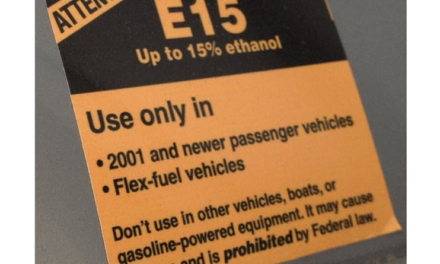
Eichberger: You can use labels. We use labels for E85 and E15. Some argue labels aren’t enough. Some argue they are. From my perspective, it’s not a technical problem. It’s agreeing on a pathway and recognizing there will be violations. What are the consequences, and who is responsible if we don’t physically prevent misfueling?
The only time we physically prevented wrong fuel use was the leaded‑to‑unleaded transition. Even then, people used funnels and can openers to fit leaded nozzles on unleaded and destroyed catalytic converters. Consumers will do what consumers do. How much is industry’s responsibility to control consumer behavior? That’s a debate far from resolved. We didn’t resolve it when legislation tried to increase minimum octane to 95 RON, and we won’t solve it easily now. It requires conviction to find a pathway acceptable to most.
Reid: That was also the debate with E15. Liabilities, misfueling, intentional misfueling. People with cars older than 2001 not rated for E15 would still use it because it’s cheaper. We seem to have moved beyond that, but we’re not talking about a 5 percent increase. We’re talking considerably more. And for those unfamiliar, E15 or E30 refers to the percentage of ethanol in a gallon of gasoline, though it’s not always strictly 15 or 85 percent.
Eichberger: There’s variability. People point to Brazil going to 30 percent ethanol. It’s temporary, but their base is 27 percent. All their vehicles are flex fuel. Why don’t we make all our vehicles flex fuel? We were moving that way when George W. Bush was in office. He had a ceremony with the Detroit Three saying half of all vehicles would be flex fuel by 2012. Never came close. The cost of making a flex‑fuel vehicle isn’t much. The cost of certifying it is. Because we weren’t mandating E85 use and there wasn’t proof E85 was used in high volumes, vehicles lost their CAFE credit and OEMs stopped making them.
The bridge would be bringing flex‑fuel vehicles back. What’s the incentive? We don’t have one unless there’s regulatory push. There are wrinkles. There are aftermarket kits. People in the ethanol industry have aftermarket units that convert any vehicle to flex fuel by adjusting the engine control module.
Reid: And there are a few other…
Eichberger: Approvals, plastics, but those are component swaps with different chemical makeup. For the most part, we’re building cars that are compatible, but they must be calibrated. If there’s an easy aftermarket way and economic incentive, maybe there’s a trend toward higher compatibility. We’ll see.
You need compatible vehicles. They may not be optimized yet. But if you make them compatible, demand can grow. Retailers will sell anything customers are willing to pay for.
Reid: God bless.
Eichberger: The ingenuity and entrepreneurship are fantastic. If consumers want to save money and get more octane bang for their buck, they might buy E30. The energy delta isn’t huge. You still get octane boost and cost savings. If customers want it, there’s a way. Equipment is available. Most tanks installed in the last decade are compatible with E100. We can bring this product to market. We can sell it. The hurdle is who is allowed to use it and how to increase market share to justify fuels industry investment.
Reid: If it becomes ubiquitous, price premium will settle. Blender pumps might help with carrying multiple products.
Eichberger: If you look at E15 today and take RINs out, I’m paying 50 cents less for E15 than 87. Economics will figure themselves out. Ethanol typically trades for less than gasoline. Government incentives help. If we return to carbon‑focused regulation, that provides offsets. We did our octane study nine years ago. We assumed E10 was the best way to reach 95 RON without converting dispensers or tanks. After 200 pages, the most economical way was replacing all tanks and dispensers and using E30.
Reid: Wow.
Eichberger: Infrastructure cost is high, but E30 is still cheaper because it’s lower‑cost octane. Replacing E10 with E30 is different. That’s where we ran into problems. We tried to replace base 87, which won’t happen. As an additional product that fills an economic and performance gap, there’s opportunity. But demand is critical. If we can’t sell it, I’m not storing it.
Reid: There are trade‑offs. Lower energy level with ethanol. But it comes back to dollars. With premium, I get benefits with my turbocharged engine, but conventional premium doesn’t offset the cost. With mid‑level blends, you might get slightly lower mileage at higher levels, but you save money. Filling up 10 miles earlier won’t matter.
Eichberger: I asked the ethanol industry 15 years ago: why E85? You have a 27 percent energy delta with E85 versus E10. Why not E30 or E40? Reduce the delta. You don’t need a dollar gap. You could enhance margins. It’s cheaper on the dispenser side. It might be easier to sell because fuel economy impact isn’t as evident. Nobody had an answer. They said it could have been E85. It didn’t work out. So what’s next?
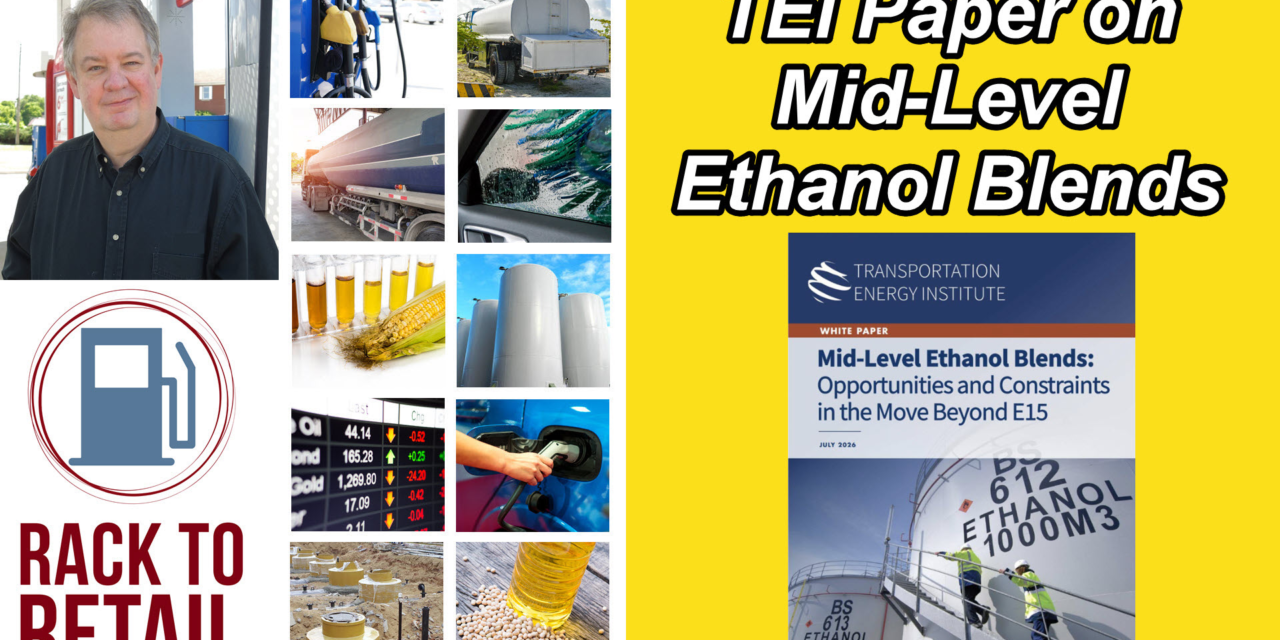
This paper will hopefully get us talking about whether we need to do anything. It depends on the market. Who knows if fuel demand forecasts are accurate. But if we want to go that route, and some OEMs are clamoring for it, we must build demand. If we build demand, there’s profit opportunity for retailers. If those come together, the market could develop quicker than we think.
Continued on the next page