By David Morrow
Walk through any terminal, and you’ll see a lot of impressive equipment. Pumps move thousands of gallons every hour, storage tanks tower overhead, and automated systems monitor pressures, flows and operating conditions in real time.
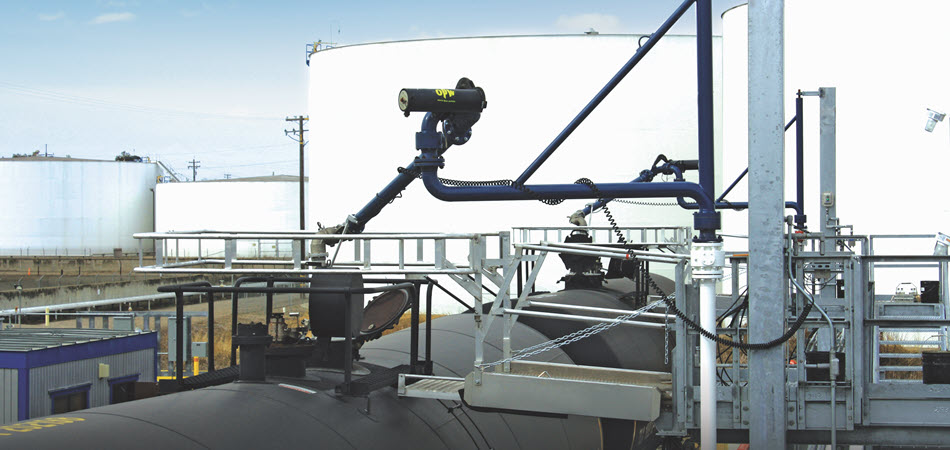
Yet one of the most important interactions in the entire operation happens on a much smaller scale. It happens when an operator reaches for a loading arm. That moment lasts only a few moments, but it says a great deal about how a company thinks about safety, productivity and the people responsible for moving product every day.
When it comes to the safety and productivity of fluid transport and logistics, fuel terminal design and functionality should never be taken for granted.
Far more than a layout of pipes and storage tanks, terminals have evolved into a critical fluid transfer ecosystem. As a result, operators must emphasize component compatibility and functionality. This includes vehicle traffic flow, risk mitigation plans and the installation of integrated fluid transfer systems designed for performance, quality and, most of all, safety.
That is why there is no one-size-fits-all approach to establishing a safe and efficient terminal loading system.
With global demand for traditional and renewable fuels continuing to see-saw, terminals and fleets need to balance efficiency and flexibility to maintain and transfer inventory to meet evolving logistical demands. This is especially true for hazardous fluid transfers, such as gas, oil and chemicals, where plants only make money when they ship the product. If not done right, there is a problem – likely a costly one. You can’t oversimplify that. This underscores the importance of implementing properly spec’ed, durable loading equipment and staying on top of the challenges that can arise with terminal layout.
Modernizing Fluid Transfer Equipment
Hoses were the longtime, affordable standard for bulk fluid transfer. But between biannual pressure tests and the likelihood of drops, runovers and improper storage, hoses can be easily worn or damaged. This increased their cost significantly over time.
Beyond the compounding expenses, hoses are clunky, ergonomically unfriendly (especially in bad weather) and can be unsafe. In addition, the constant risk of environmental spills and major manual-handling incidents became too great to ignore.
Fortunately, loading arms have solved all that.
This vital component makes the fluid transfer process much safer and faster, with far less manual effort than older hose systems. But the reality is, the very nature of this industry means there will be occasional problems, even with the right equipment. The good news is that experienced, expert loading arm manufacturers and engineers can mitigate – or eliminate – the fluid-handling issues operators face, which can make all the difference between running a successful operation and dealing with bigger, more expensive issues.
This should be among the top considerations for fluid transfer components in a safe and productive terminal design, especially given the various transporters and containers that must be loaded and unloaded. In addition to tankers and railcars, facilities must be properly equipped to handle intermediate bulk containers (IBCs), totes and drums.
Storage Terminal Site Considerations
As mentioned, no two facilities are the same. But a storage terminal’s design and layout will help determine how operators load and unload fluids.
For petroleum products, bottom-loading has become standardized because of improved operator safety, faster loading times and better environmental protection. First and foremost, bottom-loading eliminates the need for the operator to climb atop the tank and hook up the hardware to transfer fluids. It also generates less turbulence in the tank, which reduces the dangers of producing static electricity. Additionally, bottom-loading creates a closed-loop system that captures harmful emissions and helps prevent compliance violations.
Another key benefit to bottom-loading is that it’s a simpler system and generally more affordable to build than top-loading racks. This obviously helps the bottom line.
But even with the advantages of bottom-loading systems, top-loading is how most fluids and chemicals are loaded into tank trucks and railcars.
Top-loading is most commonly used in chemical applications, with specific details to be addressed for safe operation. This factor, combined with sufficient vertical clearance for various drop-pipe lengths, makes top-loading an efficient and cost-effective method.
Operators must also take into account the different filling styles for top-loading racks and the positioning of the vehicles for loading or unloading the fluid.
For top-loading, it starts with the site. Operators and installers should walk through some critical process details at the onset of every project:
- What product is being handled, and how is it currently loaded/unloaded?
- What is the site layout?
- Where is the piping?
- What does the safety access equipment look like?
- How much mis-spotting is required?
If using open-dome loading, where the fluid enters the transport through the top of the vehicle, vapor recovery equipment may be installed to capture emissions. Depending on the layout and design of the loading rack, it is important to know how to position tankers and railcars to avoid mis-spotting. This is a common problem, especially when the loading area must handle multiple vehicles simultaneously. Re-spotting tankers and railcars can take considerable time, reducing productivity – and profits.
To avoid these potential production slowdowns, the loading arm system should be designed with the flexibility to operate within the site’s nuances.
For either the top- or bottom-loading method, the operator must also ask some questions concerning the loading arms themselves. Specifically, what does the process look like? Operators should be able to define this, but if not, an experienced installer can guide them. Other questions that should come up might include:
- What type of connections will they have?
- What type of quick or dry disconnect should be used?
- Is any valving needed?
Evaluating each valve and connection before installation to ensure compatibility is important. This is an instance where an experienced manufacturer can thoroughly spec everything up front to avoid potential problems later.
Additional Pre-installation Checks
Once the terminal design, fluid transfer equipment and transport variables are addressed, there are some other variables specific to the loading arms that should be taken into account before installation, such as:
- Is any special non-destructive (NDT) testing required? Such tests might include radiographic (X-ray), hydrostatic or dye-penetrant.
- If the fluid(s) need to be at a certain temperature, will the arm need to be heated or insulated?
- Does the installation account for any additional weight?
- Will the loading arms require blowdown or venting connections? Always factor in the design of the loading system and the product itself to account for this type of hardware.
The Critical Nature of Safety and Risk Mitigation
Perhaps the biggest burden manufacturers and operators face is ensuring the equipment allows for safe and easy operation. When dealing with hazardous materials that require a critical, delicate transfer, safety is paramount. This is also precisely why risk mitigation should be a top priority at every site.
One of the most dangerous areas at a plant is the loading rack because it’s the intersection where people meet pipe.
The fixed piping within the plant is safe, but when people connect it to a transport, break into the line and transfer hundreds of gallons of hazardous fluid, many variables are introduced to the system that can bring operational dangers. This should put safety considerations at the forefront.
The more hazardous the fluid, the more complex the required hardware and thus, the greater potential for accidents. That is precisely why plants establish multiple levels of protection and why operators need to count on components that make the work simpler and safer.
For example, loading arms themselves, safety breakaways and dry disconnects are all levels of safety protection from a common problem, such as pullaways. Overfill protection features add another level, which can contribute to safety redundancy and help mitigate the risk of spills or other serious accidents.
Given all the factors that go into safe and efficient terminal design, operators can get ahead of the game by partnering with a reputable, trusted manufacturer that offers integrated equipment and support solutions to meet exact project demands. This includes engineering loading arms with precise connections for each application to ensure they won’t bind and to minimize the inherent risks of loading and unloading accidents.
Conclusion
When it comes to safe and productive fluid transfer, the right terminal design and components are not nice-to-haves; they are critical for the operation.
Successful installation and practical equipment use in the loading area require consideration of every factor, including range, clearances and access to the correct (often multiple) connections, from the storage tanks to the loading arms.
If any component is misaligned or misapplied, it can cause equipment malfunctions and damage, resulting in spills, environmental hazards and unplanned downtime.
If the loading arm system at a storage terminal isn’t designed with the unique characteristics of the site layout and the fluid product(s) in mind from the start of a project, the entire operation can become unbalanced, and downtime can escalate quickly.
Working with a trusted, reputable manufacturer with the experience and expertise to engineer precise systems that meet the demands of every installation and operation is critical to ensuring a safe, efficient and successful site.
David Morrow is Director of Sales for OPW Engineered Systems, Hamilton, OH, part of Dover Corporation’s OPW division. He can be reached at (800) 547-9393 or David.Morrow@opwglobal.com. For more information, please visit opw-es.com. OPW is the global leader in fully integrated fluid-handling, management, monitoring and control solutions for the safe and efficient handling of critical petroleum-derived fluids from the refinery to the commercial and retail points of consumption. That is why terminal operators across the world count on OPW.